Subtitle: Why a water withdrawal permit may be the least transferable asset your client is underwriting — and why “zero water” cooling doesn’t end the exposure, it moves it upstream
The quieter utility
The last edition closed on power: the fight over megawatts, the queue positions that don’t convey cleanly, the tariffs written like bond indentures. It ended with two words — next time, the water — and that promise turns out to understate the problem. Power is loud: entitlement hearings, grid-interconnection queues, tariffs filed with a commission. Water is quieter, and in most of the country east of the Mississippi, it is quieter because it isn’t property at all. It is a license, issued by an agency, revocable on notice, and rarely built to survive a sale.
That distinction — property versus permission — is the whole edition. It shows up in the statute books, in the discharge-permit dockets where the enforcement has actually landed, in the loan file where a lender discovers its collateral package never reached the water right, and in the industry’s own marketing, where “water positive” and “zero water” cooling claims often just relocate the consumption to the power plant supplying the site — the exact utility the last edition was about.
Key takeaways for attorneys, CPAs, and lenders
- In most eastern states, the withdrawal permit is not a property right. South Carolina says so in the statute’s own text; Georgia caps the term at ten years for non-farm users and can revoke on sixty days’ notice; several states require agency consent before a permit can move to a buyer at all.
- Enforcement so far has landed on discharge, not withdrawal. The largest realized recovery is a $20.5 million wastewater settlement in Oregon; the largest procedural loss is a statewide Ohio general permit withdrawn after 7,000 comments; the sharpest single sanction is a discharge privilege revoked outright in Wyoming.
- “Zero water” is a relocation, not a solution. National laboratory data puts indirect water consumption — the water used to generate the electricity a data center draws — at roughly twelve times the water used on-site. Solving the power edition’s constraint can quietly worsen this one.
In most of the East, the permit is not property
Start with the plainest statement of the problem, because a legislature already wrote it for us. South Carolina’s surface-water withdrawal statute states outright: “The permit does not convey a property right in the water to the permittee” (S.C. Code § 49-4-110(A)). Georgia doesn’t phrase it as bluntly, but the mechanics say the same thing: a non-farm withdrawal permit runs a maximum of ten years, is revocable on sixty days’ notice, and cannot transfer to a new owner without the Environmental Protection Division’s approval (Ga. Comp. R. & Regs. 391-3-2-.05, -.07). Minnesota requires ninety days’ notice plus the commissioner’s written consent to transfer a permit, and terminates it automatically after five years of nonuse (Minn. R. 6115.0750). Virginia is the outlier worth knowing precisely because it cuts the other way: withdrawal permits transfer automatically with the property unless the Department of Environmental Quality objects within fifteen days (9VAC25-210-180) — buyer-friendly, and unusual enough that counsel should confirm which regime governs before assuming either default.
The drafting consequence is specific: agency consent to a permit transfer is a condition precedent to closing, not a representation and warranty your client can simply extract from the seller and rely on. A seller can promise all day that the permit conveys; in Georgia, South Carolina, or Minnesota, the promise doesn’t bind the agency that actually controls the outcome.

That contrast matters because so much data-center siting is now happening east of the prior-appropriation states, where a water right can be a distinct, recordable property interest bought and sold on its own market. Move east into the regulated-riparian states writing most of the current tariffs and permits, and the water position looks structurally more like the utility contracts from the power edition than like the land itself: a revocable license layered on top of the deed, not a right that runs with it.
Approval-stage risk: three projects, one year
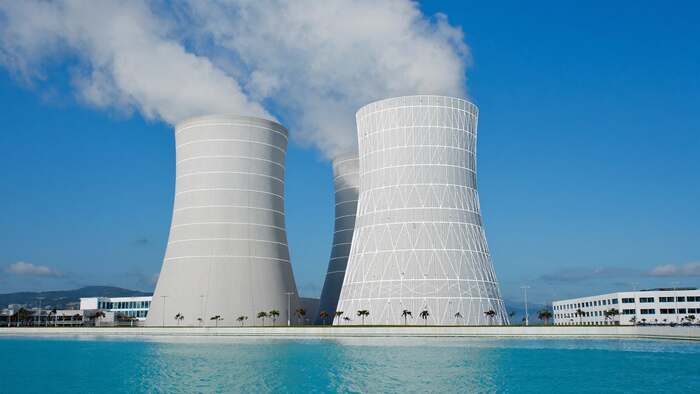
Water is killing projects the same way defective notice killed the Digital Gateway. Project Blue, a proposed campus near Tucson, died in August 2025 over its water demand. Hanover County, Virginia’s Mountain Road Technology Park failed in May 2026. The Coachella Valley Technology Campus in California followed in June 2026. Tucson didn’t stop at rejecting the next proposal — in May 2026 it revoked a project’s construction water meter outright and demanded two acre-feet in replacement credits.
Local ordinances are doing real work underneath the headline votes. Marana, Arizona’s town code flatly refuses potable water for data-center cooling (Town Code § 17-6-13). Tucson Ordinance 12188 reaches any large water user drawing more than 7.4 million gallons a month. Forsyth County, Georgia bars county water for cooling altogether; neighboring Lumpkin County instead caps discharge temperature by fishery classification. Jones County, Georgia adopted an ordinance in January 2026 that is thinner than it has been reported — it contemplates closed-loop systems but sets no enforceable minimum standard. Newton County, Georgia has a moratorium-backed draft ordinance that remains just that, a draft, under a moratorium running to August 19, 2026.
Two corrections belong in every diligence memo, because the trade press keeps getting them wrong in the more alarming direction: no state has enacted a closed-loop cooling mandate (South Carolina H.4583 and Kansas SB 400 remain pending), and no state has enacted a blanket data-center water moratorium — fourteen were considered, Maine’s governor vetoed one in April 2026, and New York’s was still awaiting the governor’s signature as of June 2026. What has actually been enacted is narrower: Minnesota now requires a Department of Natural Resources preapplication evaluation for any facility projected to use more than 100 million gallons a year (Minn. Stat. ch. 12), and Virginia’s HB 496 (Ch. 623) requires waterworks to report data-center water sales by category starting January 1, 2027 — that statute captures utility sales to data centers, not water a facility draws from its own wells, and the underlying facility-level data is trade-secret protected.
One asymmetry is worth flagging for anyone comparing a data-center site to the residential development next door: Arizona Revised Statutes § 45-576(G) exempts land held under an industrial-use permit from the assured-water-supply requirement that has blocked new groundwater-dependent residential subdivisions in the Phoenix Active Management Area since the Department of Water Resources’ June 2023 finding. A data center can self-supply groundwater where a subdivision on the same aquifer could not be certificated. Caveat: an Arizona court has enjoined the residential half of that rule — confirm current status before relying on the comparison in any specific analysis.
Enforcement has landed on discharge, not withdrawal
If you are underwriting litigation risk, look at what has actually been sanctioned so far — and it is the water leaving the site, not the water entering it. In Pearson v. Port of Morrow (D. Or., filed February 2024), Amazon Data Services agreed to a $20.5 million settlement, with preliminary approval sought March 31, 2026; the case alleges that server-cooling wastewater concentrated nitrate before land application, affecting roughly 45,000 residents of the Lower Umatilla Basin. The settling party denies causation, and the settlement is the largest realized recovery in data-center water litigation to date — a number every audit committee modeling this exposure should have in hand.
In Cheyenne, Wyoming, Cupriavidus gilardii was found in the city’s recycled-water irrigation system in February 2026; the city revoked Meta’s discharge privileges on March 24, 2026 and publicly announced a finding of significant noncompliance with federal pretreatment rules on July 2. Meta appealed on July 15, 2026, disputing the source evidence and seeking a refund of a $10,000 fine — a small fine attached to a much larger loss, since what was actually taken away was the operating privilege, not the money. And Ohio EPA’s proposed general NPDES permit (OHD000001), which would have covered every data center in the state under a single instrument with a pre-baked antidegradation finding, drew more than 7,000 comments and was withdrawn in July 2026 — reverting every covered facility to individual permitting, with the schedule risk that implies for anyone counting on a fast discharge approval.
Transfer and collateral: what a lender’s diligence misses
Title insurance will not save the deal. The 2021 ALTA Loan Policy, Condition 1.n, excludes interests in any body of water or waterway from coverage, and practitioners report that title companies simply do not write water-rights coverage in Colorado, Nevada, or New Mexico. Whatever comfort a loan policy gives the lender on the fee interest, it is not giving comfort on the water.
Mortgage capture is jurisdiction-specific in a way that punishes assumptions. In Oregon, a deed of trust generally captures appurtenant water rights unless specifically excluded; in New Mexico, irrigation-related rights pass with a conveyance while non-irrigation rights do not. And a water right can be severed from the land after closing without any notice reaching the lender — perfection of the collateral position is a monitoring obligation that runs across both the county recorder and the state engineer’s office, not a box checked once at origination.
Foreclosure inherits the permit’s clocks along with the land: beneficial-use deadlines, forfeiture periods, renewal windows. A lender that forecloses on a dormant site can find the water right has lapsed for nonuse before the property ever reaches a buyer. The recommended covenant is simple to state and easy to skip: require evidence of continued beneficial use at least every five years, tied to the shortest nonuse-termination period in the applicable state.
Even where a water service agreement exists rather than a self-supply permit, the risk allocation tends to favor the utility. Loudoun Water’s published reclaimed-water template promises remarkably little: volume is described as “merely an estimate and not a guarantee,” pressure is disclaimed, and the utility can terminate on thirty days’ notice. The pricing spread explains why data centers chase these deals anyway — Loudoun’s reclaimed rate is $2.07 per thousand gallons against $4.42 to $7.59 for potable, effective January 1, 2026 — but the availability charges are not trivial: $15.62 per gallon-per-day of water capacity plus $41.31 per gallon-per-day of sewer capacity, which on a roughly 1-million-gallon-per-day facility implies on the order of $15.6 million in water availability charges alone before sewer is added (that arithmetic is ours, not a published figure, and should be rebuilt against the current rate schedule for any specific deal). And “replenishment credits” — the offset credits some operators tout in sustainability marketing — are legally thin air: no authority was found establishing them as property interests, as appurtenant to the land, as assignable, or as pledgeable collateral. Treat them as, at best, unsecured contract rights.
The market has not caught up to any of this. CBRE’s Global Data Center Trends 2026 (June 17, 2026) flags water risk for exactly one market worldwide — Greater Santiago. Regulators and neighbors are pricing water risk well ahead of the capital markets.
“Zero water” just moves the consumption upstream
The industry’s preferred answer to all of this is air cooling and “water positive” pledges. The physics complicate the marketing. Lawrence Berkeley National Laboratory data shows U.S. data centers consumed roughly 66 billion liters of water directly in 2023 — and roughly 800 billion liters indirectly, through the electricity generation that powers them. That is a ratio of about twelve to one. The one peer-reviewed head-to-head comparison, Karimi et al. (Resources, Conservation and Recycling, vol. 181, 2022), found that an air-cooled facility ran roughly 13% higher power usage effectiveness while achieving 66% lower source water usage effectiveness — meaning the on-site water number improves while total water consumption, counted back through the power plant, does not necessarily follow. No hyperscaler has published its own version of that trade-off. Power and water are substitutes at the margin: solving the power edition’s constraint by drawing more electricity from a thirsty grid can quietly worsen this edition’s exposure, even as the on-site meter reads “zero.”
One case worth watching rather than relying on: IVCM v. Imperial Irrigation District (Imperial County Superior Court, filed June 2026), a developer-side suit over the denial of roughly 260 million gallons a year of Colorado River water, pleads eight causes of action including a claim that water service rights are appurtenant to portions of the property — the closest thing found in the data-center context to a transfer or appurtenance holding. It is pending, not decided, and should be read as a signal of where the litigation is heading rather than as settled law.
Coming in this series
Water is the second utility in the fight. On deck for the next edition of Beyond the Core Four:
- Noise and light (next edition): the nuisance class actions cited in the power edition are multiplying, and the ordinances — decibel caps at the property line, dark-sky requirements, generator-testing windows — are quietly redrawing the buildable envelope.
- Jobs and the fiscal bargain: what a community actually receives, what it gives up, and how clawback provisions are being drafted when the promises miss.

Ten questions before your client signs
- Is the water right or withdrawal permit a recorded, transferable property interest in this jurisdiction — or a term-limited, revocable license that requires agency consent to move with a sale?
- What is the permit’s term, its nonuse-termination period, and the notice period the agency needs to revoke or decline renewal?
- Does the purchase agreement make agency consent to transfer a condition precedent to closing, or does it merely rely on seller representations the agency isn’t a party to?
- Does the title policy exclude water and waterway interests — and if so, is any water-rights coverage actually available in this state, from any insurer?
- Does the deed of trust or mortgage clearly capture appurtenant water rights in this jurisdiction, and could the water right be severed post-closing without notice reaching the lender?
- What discharge permits does the site hold or need, and has counsel reviewed the enforcement pattern in this state — general permit, individual permit, pretreatment rules — rather than assuming withdrawal is the only exposure?
- If the site relies on a water service agreement rather than self-supply, what does that agreement actually guarantee on volume, pressure, and termination notice — and what does it not guarantee?
- Have replenishment credits, offsets, or “water positive” commitments been booked as assets or relied on in underwriting, and can any authority actually establish them as property or contract rights?
- Has anyone modeled the indirect water consumption tied to the site’s power draw — not just the on-site meter — and does the diligence file reflect the power-versus-water trade-off rather than one number in isolation?
- Do the applicable ordinances (potable-water bans for cooling, discharge temperature limits, large-user thresholds) survive a change of use, and has anyone checked the moratorium and closed-loop-mandate status in this specific county rather than assuming the national trend applies locally?
The question that decides value
Power taught the same lesson the greenhouse brokers already knew: the infrastructure right is often worth more than the dirt, and it frequently doesn’t behave like real property. Water sharpens that lesson, because in most of the eastern United States the water position is not an appurtenance at all — it is a permission, issued by an agency that can attach conditions, set a term, and take it back. A parcel’s physical access to a river, an aquifer, or a municipal main is now, like its access to the grid, the least interesting fact about it. What decides value is whether the right to use that water can be delivered with enough certainty, for long enough, to finance the project — and whether that right, and the obligations bolted to it, actually follow the deed when the site changes hands.
This is the same work our team does on the power side: untangling what a client owns — and what a client only has permission to use — across land, water, equipment, contracts, and regulatory positions, and turning that inventory into numbers counsel, CPAs, and lenders can defend. Next time: the noise, the light, and the ordinances quietly redrawing what these sites can build.
A question for your practice: When a client calls about a site with an existing water withdrawal permit, does your diligence treat that permit as an asset conveying with the deed — or as a revocable license your client is simply hoping the agency renews?
Sources and further reading
Statutes and regulations: S.C. Code § 49-4-110(A); Ga. Comp. R. & Regs. 391-3-2-.05, -.07; Minn. R. 6115.0750; Minn. Stat. ch. 12 (DNR preapplication evaluation, >100M gal/yr); 9VAC25-210-180 (Virginia withdrawal-permit transfer); Virginia HB 496 / Ch. 623 (waterworks data-center sales reporting, eff. Jan. 1, 2027); Ariz. Rev. Stat. § 45-576(G) and §§ 45-514/515 (industrial-use permit exemption); Marana, AZ Town Code § 17-6-13; Tucson Ordinance 12188 (Aug. 20, 2025); South Carolina H.4583; Kansas SB 400 (pending).
Litigation and enforcement: Pearson v. Port of Morrow (D. Or., filed Feb. 2024), preliminary-approval motion Mar. 31, 2026 ($20.5M settlement, causation denied); City of Cheyenne / Meta discharge-privilege revocation (Mar. 24, 2026; announced July 2, 2026; appeal filed July 15, 2026); Ohio EPA general NPDES permit OHD000001, proposed Oct. 2025 and withdrawn July 2026; IVCM v. Imperial Irrigation District (Imperial Co. Super. Ct., filed June 2026).
Industry, market, and technical analysis: Lawrence Berkeley National Laboratory, U.S. data-center water-consumption estimates (direct vs. indirect, 2023); Karimi et al., “Water-Energy Nexus of Data Centers,” Resources, Conservation and Recycling, vol. 181 (2022); CBRE, Global Data Center Trends 2026 (June 17, 2026); Loudoun Water reclaimed-water service template and FY2026 rate schedule (eff. Jan. 1, 2026); 2021 ALTA Loan Policy of Title Insurance, Condition 1.n.
The two-parcel and diligence-file references in this edition are illustrative, presented for educational purposes only, and are not drawn from any specific client engagement. Case details, figures, and identifiers discussed from public sources are cited to those sources; pending litigation (including Pearson v. Port of Morrow, the Cheyenne/Meta discharge appeal, and IVCM v. Imperial Irrigation District) is described as pending and unresolved as of publication. This discussion is not valuation, legal, engineering, water-rights, or investment advice for any specific property, transaction, or dispute. Water statutes, permit terms, discharge rules, and local ordinances vary materially by jurisdiction and change frequently; readers should confirm current requirements with the relevant agency, utility, and counsel.
If a client’s holdings raise these questions — a site with a water withdrawal permit nearing renewal, a discharge permit under a general-permit regime that could be withdrawn, a loan file where the water position was never separately underwritten — that intersection of complex real estate and personal property is where our team works. We regularly speak to law firms and legal teams (including CLE-style briefings), CPA firms and societies (including CPE-style sessions), lenders, family offices, owner-users, and industry groups on complex property and specialized asset issues. If your firm would like a private session on these topics, feel free to reach out.
Daniel Boring, CRE®, MAI, ARA, ASA | Senior Vice President – Valuation Advisory Services | Kidder Mathews