Notes from AggNexus 3.0 · Austin, Texas
If you own a quarry, a pit, a batch plant, an asphalt plant or a materials yard, and you expect to ask someone for money in the next two years — to buy the operation next door, add a crusher line, rebuild a plant, replace a fleet, or take out a retiring partner — then what follows is a preview of the diligence you are going to face. Nearly everything the owners in Austin were discussing this month, from who owns the operating data to which vendor contract got signed in 2023, is something a lender or an equity investor will eventually ask you to document. The operating question and the underwriting question are the same question, asked from opposite sides of the table. I attended as an appraiser, which means I usually see these files later, after somebody has requested them.
A note on what this is. These are one man's observations of three days of open discussion, written from my own notes. Nothing here is a transcript, a survey or an official record of the event, and no speaker, company or engagement is identified. Where I have gotten the emphasis wrong, the fault is mine.
A producer stood up in a session in Austin this week and described a contract his company had been handed. The vendor wanted perpetual revenue sharing on the work, and ownership of any intellectual property (IP) developed inside his own operation. Not a license. Ownership. The software would learn his plant, and the learning would belong to someone else. He named no one, and nothing in his account pointed at any company exhibiting at the event.
He was not asking whether the technology worked. He was asking who, in the room or in his trade association, could have warned him before he read that clause on his own.
That question — not the capability question, not the hype question — is the one the ownership seat is actually wrestling with. Three days of panels, vendor sessions and hallway conversation produced a fairly consistent picture of what producers want from the companies selling them artificial intelligence (AI), and it has very little to do with features.
What these companies actually do
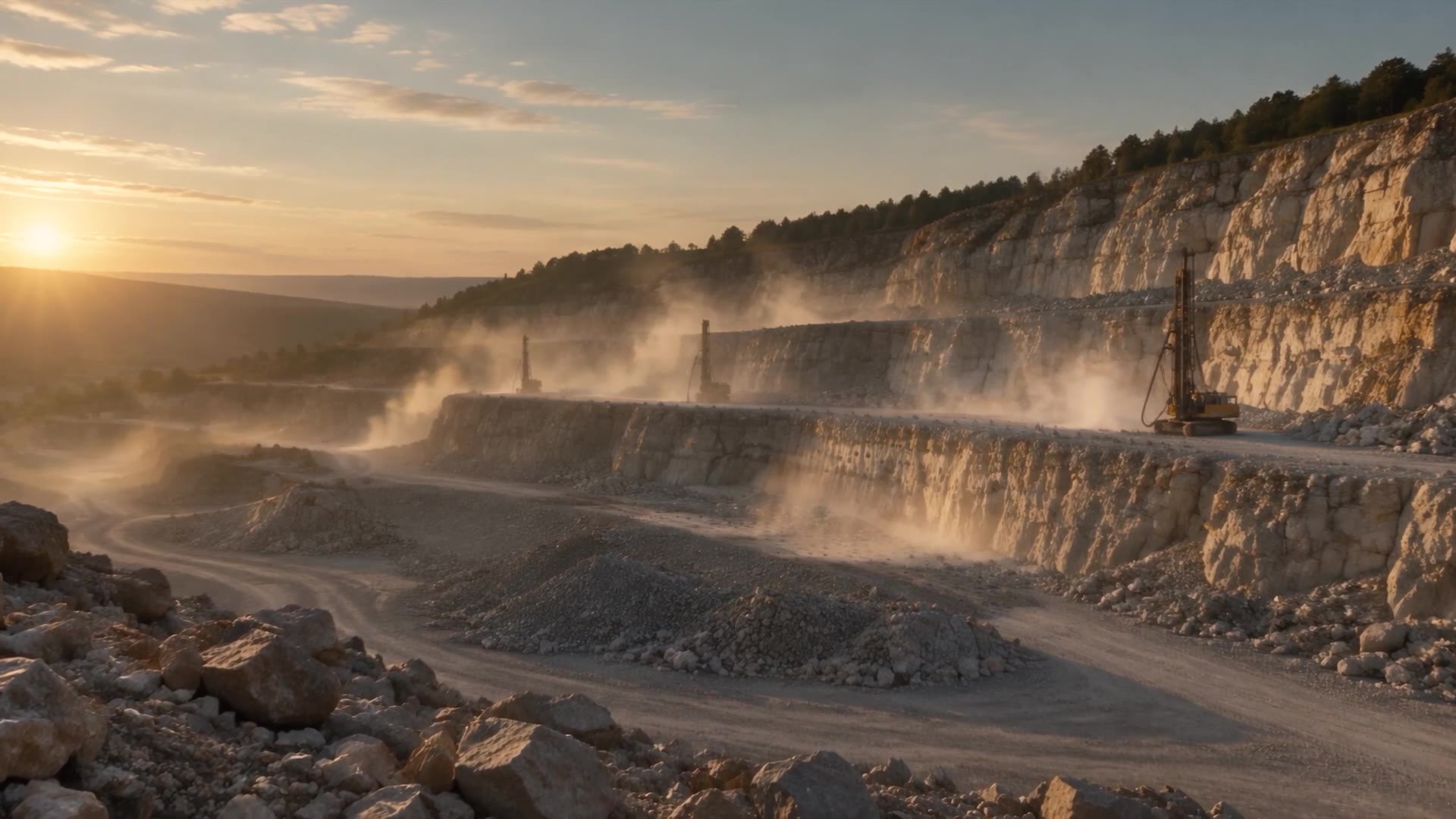
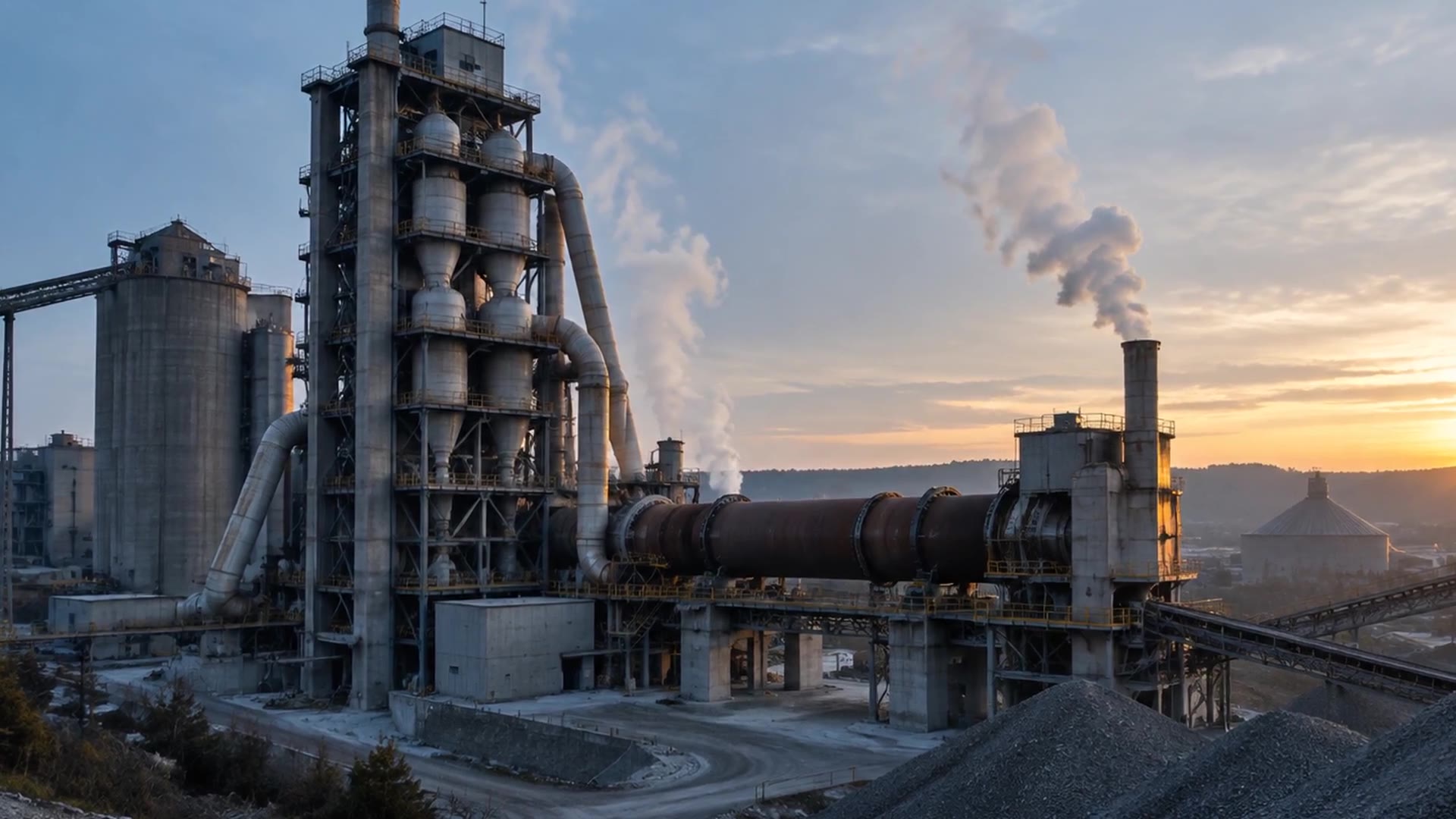
It is worth a paragraph on who was in the room, because from outside the industry it is easy to miss what these businesses are. They drill and blast rock and crush it to size. They dredge and wash sand and gravel. They grind limestone and burn it into cement. They batch ready-mix concrete and hold it to a specification while it travels. They produce asphalt, and they run the loaders, haul trucks and mixer fleets that move all of it.
They are the front end of the built world, and the supply chain is short and local. A mile of interstate, a hospital foundation, a school gymnasium, a runway, a water treatment plant, a bridge deck, a port expansion, a transmission tower footing, a data center pad — none of it exists until someone breaks rock, sizes it, mixes it and hauls it to the site, usually from within about fifty miles, because freight on heavy material governs the economics of everything downstream. Nothing in this sector is substitutable at a distance. When a quarry cannot get a permit, the projects within its haul radius get more expensive or do not get built.
The companies represented in Austin ranged from single-site family operations to vertically integrated regionals and publicly traded majors, several of them third- and fourth-generation, alongside the state and national associations that represent them. When their owners talk about what they will and will not hand to a software vendor, they are talking about the operating knowledge behind the material in every structure the rest of us use without thinking about it.
Where this was
AggNexus 3.0 ran September 15–17 at the Joe C. Thompson Conference Center on the University of Texas at Austin campus. The platform positions itself at the intersection of technology and the aggregates and construction materials industries, and this year's theme was, plainly, Change Management. The format is deliberately a dialogue rather than a lecture series, and roughly 150 producers, technology providers and association leaders attended. SEMCO Publishing organizes the event; Sika USA sponsored the reception; twelve founding vendors — among them alterBiota, Axians IAS, Bulk Exchange, Burgex, CheckProof, EveryPoint, Evotess, Giatec, Requordit, Rocket Start, skEYEwatch and TruckPay — ran the vendor rooms.
The format works, and the credit for that belongs to the organizers. Putting owners, operators and the companies selling to them in the same small room, with the panels built to be interrupted, produced more candor in three days than most conferences manage in a keynote. Very little of what follows would have been said from a stage.
My thanks to Jill Shackelford and Landstone Consulting, LLC for the invitation that put me in the room. Landstone is a Texas-based land consulting firm that works the questions arising before a transaction closes — surface and mineral rights, deposit and reserve issues, land use, and acquisition due diligence for landowners, operators, investors and their counsel. They also work on permitting and dealing with community relations. If a deal turns on what is actually under the ground and who has the right to take it, that is their work. Reach them at landstone.us.
In keeping with the format, nothing below is attributed by name. The positions described were taken in open session by owners, chief executives, operating leaders and association heads across independents, family-held regionals and public majors.
The question is no longer buy versus build
The old framing died on stage. Asked whether they buy technology or build it, the panel of chief executives rejected the premise three different ways.
One executive from a Texas producer said the word is partner — the pace of change makes a purchase decision obsolete before implementation finishes. A smaller Central Texas owner-operator said the real question for a company his size is integrate versus replace: he has disparate systems that each hold part of the truth, and what he needs is one analytical view, not a rip-and-replace. A California producer drew the line by complexity — buy the enterprise systems, build the small tools that fit an existing workflow, and he offered a quoting agent his own team built as the example. Another leader cited the consulting research directly: buying has the higher success rate, so buy the table stakes and build only where the build is the competitive advantage.
The most interesting reversal came from the producer who pointed out that enterprise software historically forced the business to reshape itself around the software. The tooling now available inverts that. Systems can be built around how a company actually runs. For a management team that has spent twenty years absorbing someone else's process model, that is not a technical observation. It is a strategic one.
Two practical consequences followed, and both are contract terms:
- Short agreements. If an internal team can replicate or route around a vendor limitation in weeks, a multi-year term with a long notice period is a liability rather than a discount.
- Liability that matches the loss. Asked what it would take to let an agent negotiate a deal without a human in the loop, one executive answered as a contracts person rather than a technologist: the provider must carry indemnity coverage sized to the full potential loss of a bad deal. Others added the size and nature of the transaction, a trial record with a demonstrated error rate, and — the point that gets forgotten — the counterparty's willingness to be negotiated with by software at all.
What never leaves the company
The data question produced the sharpest language of the conference.
Asked what should never leave the building, a producer answered "ideally none," then explained the real problem: vendor agreements routinely seize data rights, and proprietary operating data feeding a third party's model is differentiation walking out the door. A Dallas–Fort Worth concrete executive put it in competitive terms — sharing operating data subsidizes competitors — and then raised the inverse risk: bad data, or data deliberately made wrong, can corrupt a shared model. His phrase for it was salting the mines.
Others drew the boundary rather than closing it:
- By materiality. A Gulf South chief executive triages by what the data would cost if it moved. Pricing stays inside. Non-sensitive operating detail can move under controls.
- By competitive content. A Texas executive noted this was never an AI-specific question — data protection is a standing governance obligation — but supported deliberately pooling the non-competitive material. Safety performance. Internship and workforce programs. Nobody wins a bid on those.
- By artifact versus ingredient. One leader separated the prompt, which necessarily leaves the company, from the "secret sauce" — mix designs, test results, recipes — which cannot.
- By ethics and scale. A small operator argued that governed contribution to model training improves the tools everyone buys, provided the pricing layer stays private.
There is a real tension here that nobody resolved, and the honest version was said out loud: a company that insists no data leaves is usually already using external tools. The useful question is not whether data moves but which tier moves, under whose terms, and with what deletion and training rights.
Who owns it when the machine is wrong
Accountability came up in every session, and the association executives said plainly that it is the root of the fear. In a conventional operational failure, responsibility is traceable. When a model is wrong, the chain is not obvious — and the industry has no settled answer.
Ownership's answer, as stated, was uniform: the business owns the risk. Leaders lead and the tool assists; a company that acts on an unverified output owns the consequence. What varied was the specific exposure each executive had already gone looking for:
- Whether the liability insurer has been told that a model participates in a decision, and whether the policy responds if it is wrong.
- Antitrust exposure inside prompts — what an employee types into a shared tool about pricing or capacity.
- Licensed activity. Where a task carries a professional license or a regulatory sign-off, who exactly is signing.
And one senior operator named a slower risk that will not show up in any policy: the loss of intimacy with the numbers. He built his judgment by doing the arithmetic himself for years. A generation that receives the answer pre-formed may never develop the instinct that tells them the answer is wrong. An audience member asked the same question from the other direction — how do you keep critical thinking while removing the work that produced it — and the best answer offered was a personnel policy rather than a technology one: promote managers who have actually run the plant, because judging an output requires having done the thing.
Bigger mistakes faster
That exchange is the only place I said anything, and what I had to offer was a story about a spreadsheet.
As a young man I worked for the senior vice president of Boeing Military Airplane in Wichita, Kansas. The division was posting its general ledger by hand, in pencil, onto twenty-column green accounting paper. I was given the job of bringing in the first dual-floppy IBM machines and moving that ledger into Lotus 1-2-3. I did it. I was proud of it — it was the most modern thing in the building.
I carried it in to the senior vice president and he looked it over and shook his head. "This is great," he said. "This is fantastic. We can now make bigger mistakes faster!"
It remains the best comment on technology I have ever heard, and it was not a complaint about the spreadsheet. He understood immediately what the machine had and had not done. The ledger was not more accurate than it had been the week before. It was faster, and the errors inside it now propagated at the speed of a recalculation instead of the speed of a pencil. The green paper had a governor built into it: a human being had to write down every figure, and writing is slow enough that a wrong number has time to look wrong. Take the friction out and you do not remove the errors — you remove the interval in which somebody would have caught them, and you scale whatever is left.
Every control the owners in Austin described — the trial period before an agent is trusted, the human who signs, the manager promoted because he actually ran the plant — is an attempt to put that interval back deliberately, now that the process no longer supplies it for free. Forty years later, the same sentence covers the whole subject.
The vendor test, as owners described it
Several sessions converged on a practical screen. Assembled, it looks like this.
Test the claim. The most-cited filter for what the industry now calls AI-washing is a single question: was this feature impossible before? If the same output existed as a report three years ago with a different label on it, the label is the innovation. Two corroborating signals were offered — derived data that did not previously exist (actual measured loading times rather than scheduled ones), and a change in speed large enough to change behavior (queries that took hours returning in seconds).
Test the vendor. Does the vendor use these tools internally? Does it support open standards — the Model Context Protocol (MCP) was the example given — or is it building a closed ecosystem? How does it handle common vulnerabilities and exposures (CVE) remediation? In a stack where vendors integrate with one another, producers were told to ask what standards vendors impose on each other, and to insist on formal data contracts defining authentication, ownership and access rights at each integration.
Test the contract. A clear statement of work with success metrics, deliverables, governance and scope control — because the recurring failure described was not technical but the gap between what sales promised and what implementation delivered. Producers also want an honest roadmap and a vendor who stays in the room when a rollout goes badly, rather than leaving the customer on an interim process that is worse than what it replaced.
Test the size. Right-size the investment to avoid shelfware. Pilot on a subset — ten trucks was the example — prove the value, then scale. Adopt when the technology and the operation are both ready, which is a different question from whether the technology exists.
The association leaders added the institutional layer. Their role, as they described it, is to give members a place to admit what they do not know, to educate on contract diligence, and — carefully, because antitrust rules forbid steering members toward any specific product — to convene vendors around industry problems rather than product pitches. One offered to circulate warnings about problematic contract terms on an anonymized basis. Asked whether they worried more about members moving too fast or too slow, the answer was unhesitating: the ones with their heads in the sand. And a useful commercial observation for the vendors in the room — the slowest, most family-held, most skeptical buyer becomes the most loyal and most vocal customer once the tool has actually proven itself.
What the room said the tools cannot do
Three limits were described concretely enough to be worth repeating.
Local rules. A compliance executive operating across 101 municipalities and three counties said he does not trust an automated search for the constraints that actually kill a project. State permits are visible. Local ones are not. He cited Texas municipalities imposing vehicle weight limits as low as 35,000 pounds, and one county road restricted to 27,500 pounds even for a carrier holding a state permit. A curfew limiting industrial operations to 7:00 a.m. through 5:00 p.m. — imposed by a community that in the same breath asked for more skilled jobs — reshapes recruiting and production simultaneously. Water is its own layer, and it came up repeatedly. Where a groundwater conservation district has jurisdiction, the right to pump for washing, dust suppression and plant use runs through permits, spacing rules, production caps and a locally elected board, and those rules are among the hardest constraints to find from outside the market. They are not in the state permit file and they are not in the title work. Before bidding, he calls someone who has operated in that market for twenty years. He also noted that fewer than a quarter of the room belonged to a state association, and nobody raised a hand for county or city-level participation. The people writing those permit conditions are doing it without industry input, and his point was an invitation rather than a rebuke: show up and help write them.
Categories. On a two-and-a-half-year project, new superintendents brought him a one-page answer from a general-purpose AI tool on where concrete should be measured. The answer was unusable, and not because the model was poorly informed. It treated a code, a standard, a specification, a guideline and a recommendation as interchangeable, and the people asking had not defined the difference either. Each of those documents carries different authority. In a dispute, the difference is the whole case. He made the parallel point on standards participation: fewer than 20 percent of attendees' companies had a participating member in American Society for Testing and Materials International (ASTM) or the American Concrete Institute (ACI).
Knowledge that was never written down. An asset-management leader described joining a United Kingdom operation at 21 where the average age was 55. The best engineer on site had built the plant in 1983 and could walk into a building, hear a changed frequency, and name the root cause. None of it was documented. Over three years they converted what they could into systems — framed to the engineer not as a replacement but as his legacy after 33 years. He called the result less a digital twin than a digital mentor. The compliance executive, asked whether he had built one of himself, said he would participate but would not initiate it: capturing the workarounds and fine distinctions requires someone else asking structured questions, because the expert no longer knows which of his own judgments are unusual.
A final framing worth keeping. Asked whether legacy systems are the real barrier to modernization, the panel said no almost in unison. People and habits are the barrier. Legacy systems can be worked around; entrenched behavior cannot be patched.
Why an appraiser was sitting in that room
Everything above is an operating conversation. It is also, item by item, a valuation conversation — and the producers having it may not have noticed how much of what they described is about to show up in an appraisal, a purchase agreement, a lender's file or an estate return.
Data rights are an intangible asset, and contracts are giving them away. A clause assigning the vendor ownership of IP developed in the customer's environment does not merely create a commercial annoyance. It removes an asset from the enterprise. In a going-concern assignment — where the analysis has to allocate value among real property, machinery and equipment (M&E), and intangibles — the operating dataset and the models trained on it sit squarely in the intangible bucket. Whether they transfer, and to whom, is a question answered by the vendor agreement, not by the balance sheet. Ask for the agreements.
Assignability is the transferability test. Value in exchange assumes a buyer receives what the seller had. If the production optimization that lifted the margin depends on a subscription that is not assignable on change of control, or on a model the vendor owns, then the margin improvement may not survive the closing. This is the same discipline as any other rights analysis: what exists on the valuation date, in hand, transferable with the asset. A benefit that evaporates in a sale is not a benefit a buyer pays for.
Shelfware is a capitalized asset with no value in exchange. The right-sizing warning has a direct cost-approach consequence. Software and technology carried at cost, never adopted, is functional obsolescence in its purest form — an expenditure that produced no utility. It should be identified and written off in the analysis, not inherited from the fixed asset ledger.
Condition data beats age-life. The predictive maintenance material is the most underappreciated development in this space for M&E appraisal. Machinery valuation still leans heavily on age-life depreciation and hour meters because that is usually the only evidence available. Learning sensors that detect a developing failure and open a work order produce something better: an actual condition record and a maintenance history tied to the specific unit. Autonomous drilling and hauling change the underlying assumptions further — duty cycles, operating hours, maintenance intervals and effective age no longer track chronological age the way the depreciation tables assume. An appraiser with access to that record can support effective age directly rather than inferring it. An owner who has that record and does not produce it is accepting a table-driven answer when a documented one was available.
Institutional knowledge is going-concern value. The digital mentor discussion is, in appraisal terms, a discussion about whether the assembled workforce and the operating know-how walk out the door with a retirement. In a going-concern allocation, they are intangible value. An operation that has captured that knowledge in a transferable system has converted a personal asset into a business asset. One that has not is carrying a key-person risk that belongs in the discount rate.
Local constraints are economic obsolescence, and they are not in the title report. A 27,500-pound road restriction on the only practical haul route, a municipal curfew, a groundwater district's production cap on the water a wash plant depends on, an unusual permit condition — each of those directly limits the volume an asset can move and therefore what it earns. None appears on a title commitment. This is the same lesson data center and mining assignments have been teaching for several years: projects lose substantial value after development begins because noise, water use, zoning or community opposition surfaces outside the recorded documents. Clients increasingly want a going-concern opinion that also identifies the threats to completion, and the local-expertise point the compliance executive made about bidding is exactly the point an appraiser has to make about due diligence. An automated search will not find the curfew.
Accountability is a scope-of-work problem. The Uniform Standards of Professional Appraisal Practice (USPAP) frame this cleanly for my side of the table. When an analysis relies on a model-generated input, the appraiser signing the certification owns it, and the scope of work has to disclose what was relied on and what was verified. "The system produced it" is not a workfile. That is the identical standard ownership articulated for itself in Austin, arrived at independently: the tool assists, the signer is accountable.
The through-line
The producers in that room are not afraid of the technology. They are negotiating with it. What they said they want from vendors is short contracts, clear data boundaries, indemnity sized to the loss, honest roadmaps, and proof on their own data before scale. What they said they want from each other is a place to compare notes without violating antitrust. What they conceded they cannot get from any of it is the local knowledge, the category discipline and the judgment that only comes from having done the work.
Rights, evidence, and what a market will actually pay. That has been the argument in every edition of this newsletter, whether the subject was a quarry, a marina, a fish hatchery, a greenhouse or a perpetual deed. It turns out to be the argument in a technology procurement too. The clauses being signed this year will decide, five years from now, whether an operating advantage is an asset the business owns or a service it rents — and which of the two a buyer, a lender or an examiner will pay for.
A question for your practice: On your last technology agreement, who read the data and intellectual property clauses — and was it the same person who will have to explain to a buyer what actually transfers?
Solving complex real estate and personal property problems is the work our team does. On a materials operation, that usually means assembling one inventory of what the client actually owns — the land and the reserves beneath it, the water and mineral rights, the permits, the plant and the mobile fleet, and the operating business that ties them together — and then turning that inventory into numbers a lender, a buyer, a court or a taxing authority will accept. Data rights, vendor agreements and equipment condition records are simply the newest line items on that inventory.
An offer, for owners on the capital-raising side of this. If you expect to approach a lender or an investor — for an acquisition, an expansion, a plant rebuild, a recapitalization, or the buyout of a retiring partner — we will walk your team through what that audience wants to see before it commits: how reserves and remaining plant life get tested, which documents get requested and in what order, how going-concern value is separated from the real property and the equipment, where a file typically stalls, and what the diligence team does with the answers once it has them. It is an overview session, not a pitch, and we present it to ownership groups, boards, family offices and their advisors.
If a client's holdings raise these questions — a quarry or aggregates operation, a plant in the middle of a systems conversion, a family business approaching succession, an operating asset where the real estate and the business are entangled — that intersection is exactly where our team works. If your firm would like a private presentation on these topics, feel free to reach out. We regularly present to law firms and legal teams (including continuing legal education (CLE)-style briefings), certified public accountant (CPA) firms and societies (including continuing professional education (CPE)-style sessions), family offices, owner-users, and industry stakeholders on complex property and specialized asset issues.
Daniel Boring, CRE®, MAI, ARA, ASA | Senior Vice President – Valuation Advisory Services | Kidder Mathews
Beyond the Core Four focuses on specialized properties that fall outside the traditional industrial, retail, multifamily, and office categories. The newsletter examines how value, risk, and utility are shaped by the operational realities of assets such as quarries, marinas, agricultural facilities, processing plants, water-dependent operations, and other complex property types where the real estate is only part of the story.
Further reading: AggNexus.
These are one man's observations, recorded from personal notes and offered in good faith. Speakers, companies and specific engagements are not identified; positions are described by role, industry and general geography only. Nothing here is an official account of the event, and no endorsement by the organizers, sponsors or participating companies is implied. The discussion is based on real-world appraisal and advisory experience and is presented for educational purposes only. It is not intended as valuation advice, legal advice, tax advice, accounting advice, or investment advice for any specific property, transaction, or dispute.