From the RFD-TV Land Report · September 30, 2026
Television is a discipline. Last week I sat for my second interview on the Land Report, the American Society of Farm Managers and Rural Appraisers (ASFMRA) segment that airs on RFD-TV. The segment ran five minutes and sixteen seconds. I walked in with about fourteen minutes of prepared answers, and the host, who has done this far longer than I have, used the time exactly as it should be used: four questions, four short answers, and an unscripted turn to cattle and drought at the end.
What follows is the long version. It is what I would have said with a legal pad and an hour, organized around the same four questions, with the figures checked again since the taping. Where the numbers I gave on air were rounded or loose, the corrected versions are here.
The segment itself is on YouTube: Southeast Land & Ag Market Update | Daniel Boring, ARA | Land Report.
The September 30, 2026 Land Report segment (5:16). Courtesy of ASFMRA and RFD-TV.
One sentence ties the four topics together, and it is the one I would ask a farm family to keep: know what you own before someone else tells you what it is worth.
1. Conservation easements: two markets that share a name
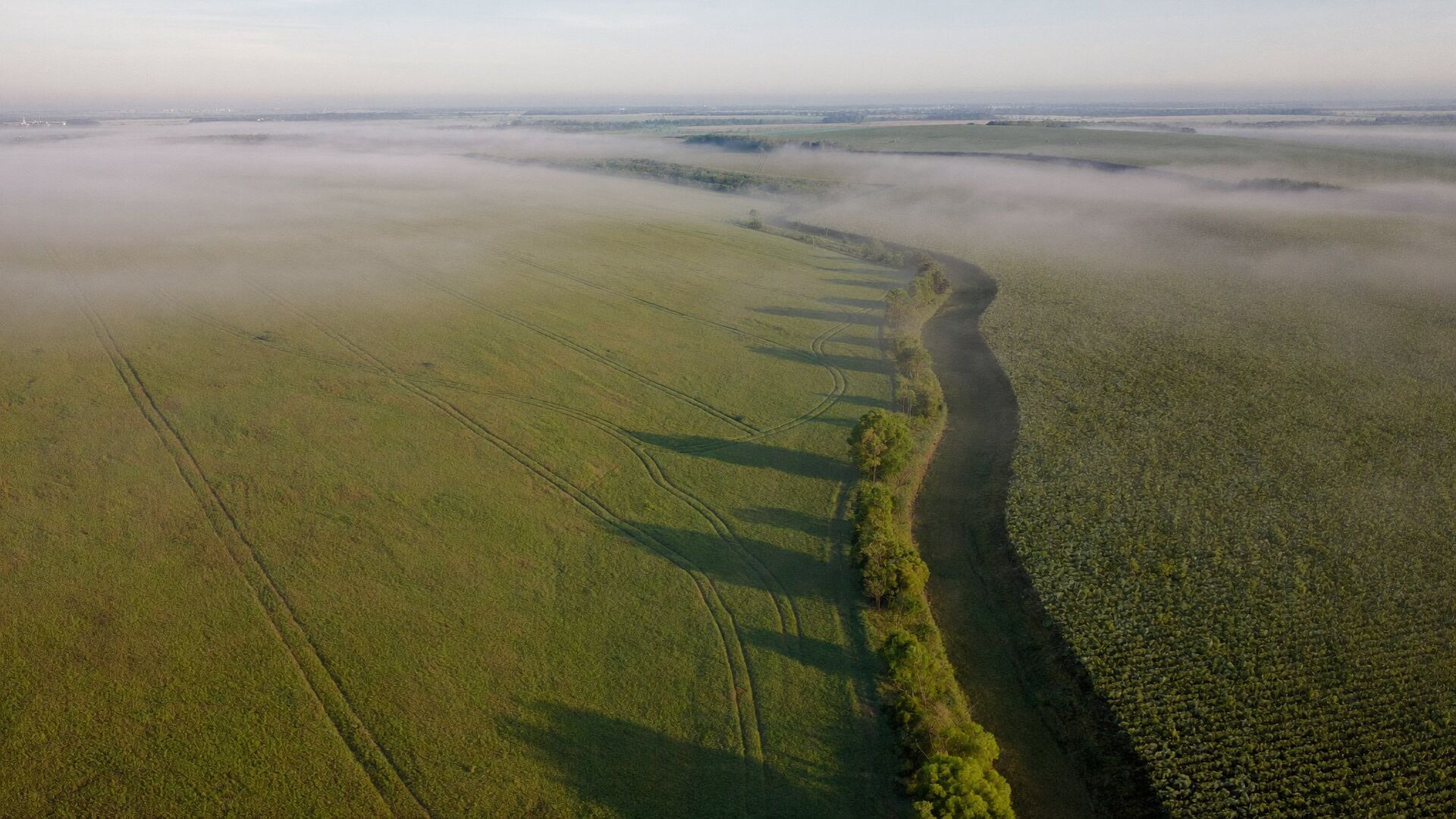
For most of a decade in Georgia, "conservation easement" meant an Internal Revenue Service (IRS) audit. That reputation was earned by the syndicated deals — investors buying into a partnership that held rural land, an appraisal that assigned the land a speculative highest and best use, and a charitable deduction worth several times the cash invested. Those transactions are being unwound, and the numbers are not close.
The syndicated side. In May the IRS announced a time-limited settlement initiative covering roughly 1,100 pending cases, about 740 docketed in the Tax Court and about 400 still in examination. The release put two figures in front of taxpayers. On average, the Tax Court has allowed only 6% of the originally claimed deduction. Cases that did not take the offer would be resolved on hazards of litigation at approximately 5% to 7% of the claimed deduction, plus a 40% penalty. On August 19 the IRS closed that uniform initiative and created a permanent Office of Conservation Easements. Elections already submitted are being honored; the open window is not.
Two recent decisions involved Georgia land:
- Rising Rock Partners (T.C. Memo. 2026-45, June 2, 2026). About 226 acres of granite-bearing land in Meriwether County. Claimed deduction: $12,765,000. Allowed: $649,955. The court leaned on an arm's-length purchase of the same property thirteen months earlier for $941,303, and the 40% gross valuation misstatement penalty applied.
- Savannah Shoals (11th Cir., July 16, 2026, affirming T.C. Memo. 2024-35). About 103 acres in Hart County. A deduction of roughly $23 million came down to $480,000, with the 40% penalty affirmed.
The lesson I drew in the July edition of this newsletter on easement valuation still holds: a resource in the ground is not a resource in the market until demand, logistics and margins say so. The court starts from the presumption that the current use is the highest and best use, and the burden sits with the owner to prove a buyer would pay for something else.
The family-farm side. The traditional easement — a farm family voluntarily selling or donating development rights so the land stays in production — is having a good year, and the reason is money.
- State. Georgia's Farmland Conservation Fund finished its first grant cycle. On September 2 the Commissioner of Agriculture and the Georgia Farmland Conservation Council announced six projects tentatively selected, one in each of six counties, covering nearly 1,000 acres. Twenty-five applications requested more than $13 million. Demand outran the dollars by a wide margin, which tells you more about where this program is headed than the first awards do. (On air I said roughly 32 applications did not make the cut and credited the legislature; the correct figures are 25 applications and six selections, announced by the Department of Agriculture.)
- Federal. The Agricultural Conservation Easement Program (ACEP), run by the U.S. Department of Agriculture (USDA), was historically funded at $450 million a year. The 2025 reconciliation law stepped that up to $650 million for fiscal year (FY) 2027, rising to $700 million a year for FY2029–2031. The House farm bill passed in April keeps those levels and raises the federal cost share on agricultural land easements from 50% to 65%. The Senate Agriculture Committee advanced its own bill on a party-line vote September 16, with a different approach to the cost share, and no floor vote is scheduled before the midterms.
- Tax. For a donated easement, a qualified farmer or rancher — more than half of gross income from farming — can deduct up to 100% of adjusted gross income (AGI), with fifteen years to carry any excess forward.
How the number gets made. An easement is valued before and after. The appraiser values the whole farm with every realistic use available, then values it again with the restrictions in place. The difference is the value of the rights given up. Near Atlanta, Savannah or a data center corridor, that gap can be large. Two counties further from growth, it may be modest, because the development rights were never worth much to a buyer in the first place.
The appraisal is only half the file. More easement deductions have been lost on deed language than on arithmetic: a mortgage that was never subordinated, a clause on how proceeds are divided if the easement is ever extinguished, a reserved right to surface mine. Any one of those can disqualify the deduction regardless of how well the value is supported.
What to watch. The Georgia General Assembly in January, because the second grant cycle depends on appropriations. The Senate farm bill. And the estate tax. With the federal basic exclusion at $15 million per person in 2026, far fewer families need an easement to manage estate tax, so the motive is shifting toward cash — selling development rights to retire debt or to bring the next generation into the operation. For larger estates, Section 2031(c) of the Internal Revenue Code still allows an executor to exclude up to 40% of the value of land under a qualified easement, capped at $500,000. The Georgia Department of Agriculture projects the state could lose upwards of 800,000 acres of farmland by 2040. This tool is not going away.
The short advice. Bring in the attorney and the tax advisor early; I am the appraiser, not the lawyer. Talk to a land trust about which program fits the farm. And confirm the appraiser is qualified for easement work, because a weak appraisal is how a sound easement gets challenged five years later.
2. Power lines across the farm: 125% of what?
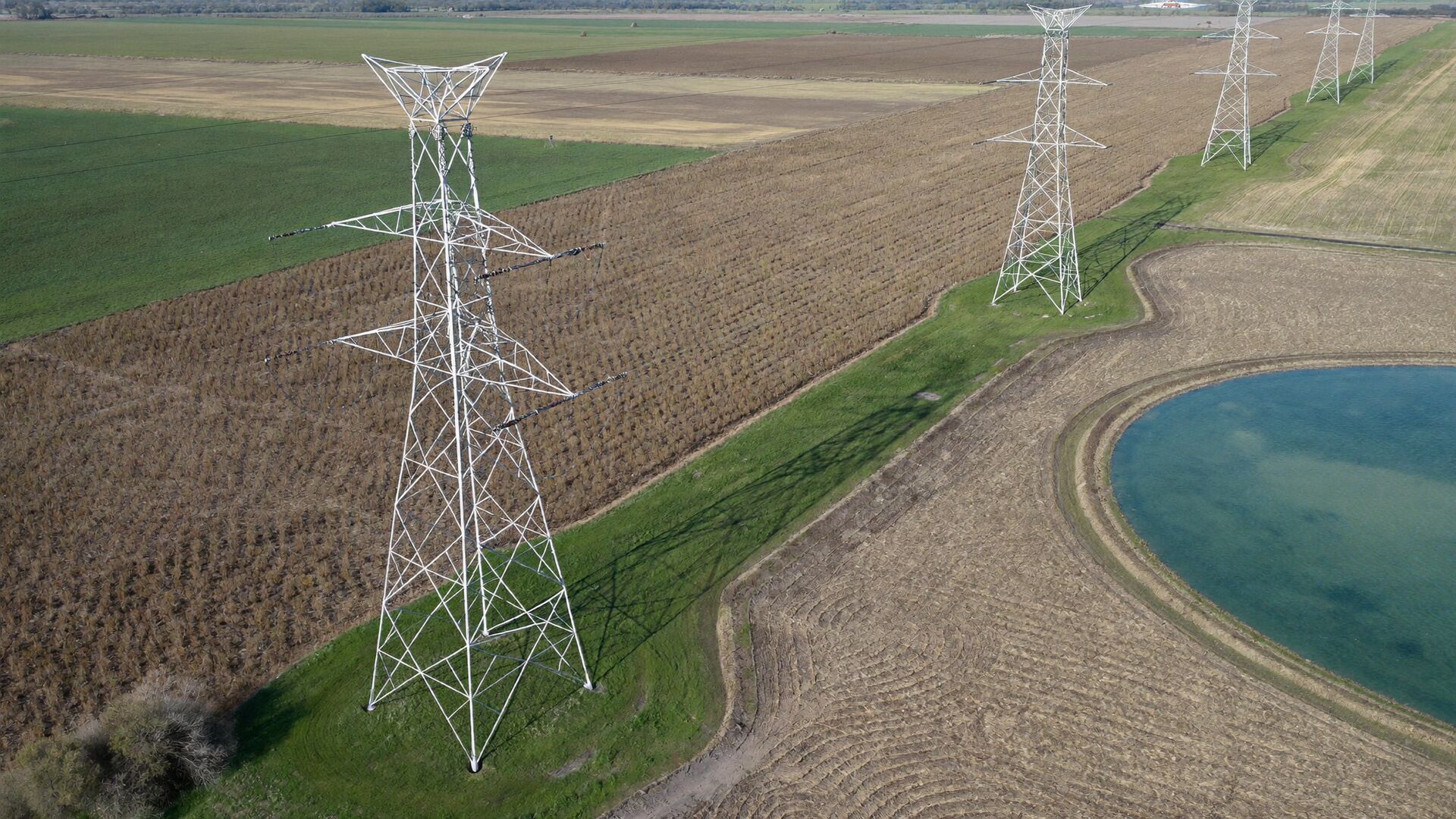
Georgia Power has disclosed plans for roughly 1,065 miles of new transmission over the next decade. Its 2022 Integrated Resource Plan called for about 50 miles of new right-of-way. A company spokesperson has said about 80% of the growth the utility is seeing in Georgia is data centers. Those lines will cross row-crop fields, timber tracts and pasture, and hundreds of parcels are already involved.
What the letter is asking for. The utility needs a permanent easement to build, maintain and clear a corridor. Georgia Power has said its offers start at 125% of appraised value and that it uses eminent domain in less than 1% of its land transactions. Both figures are the utility's own. (On air I said "assessed value." The utility's stated basis is appraised value, and the distinction matters — a tax assessment is not a market value opinion.)
The question every landowner should ask is the one I tried to make in about forty seconds on air: 125% of what?
If the underlying appraisal values only the strip under the wires, it can miss the larger loss, which is the damage to everything that remains. Appraisers call that severance damage. A line cutting diagonally across a field can interfere with center pivots, with aerial application, with how equipment turns at the headland. It can isolate the back forty from the road. It can take the one homesite a future buyer would have paid a premium for. The measure that captures all of that is the whole property before the taking, less the whole property after. A generous multiplier on a strip-only value can still be a short check.
Does a line make the land worth a fortune? Usually not. I covered this in the first edition of the data center series, When Power Becomes the Property. Land with a real, contracted power commitment has repriced dramatically — rural tracts that traded at $10,000 to $30,000 an acre have sold for $200,000 to more than $1 million an acre. In 2025, Amazon's data center affiliate paid $270 million for about 985 acres in Lamar County. But the value sits in the utility contract, not the soil. A transmission line along the fence tells you where the electrons pass, not whether any are committed to you. In Georgia, service for very large loads is governed by individual contracts reviewed by the Public Service Commission (PSC), and nothing I found suggests those commitments automatically convey with the deed.
A caution on the forecast. As of late 2025, PSC staff testimony put Georgia Power's large-load pipeline at about 50.9 gigawatts, with only about 1.9 gigawatts backed by signed contracts. Thirty-three data center projects totaling 11,332 megawatts (MW) had already exited the queue since 2023. Some of the demand behind these transmission plans may never arrive. The easement across a farm is permanent either way.
Local resistance is growing in parallel. By June 2026, 32 Georgia counties and 21 cities had adopted moratoriums, drafted data center ordinances or were in the process of drafting them. Georgia's condemnation framework for utility lines has not been revisited in a long time, and I would expect farm organizations to press the issue when the legislature convenes.
What to do when the letter arrives. Do not sign the first offer before you understand it. Read the easement language closely, because these instruments are often drafted broadly — rights to add circuits, to clear outside the corridor, to access across the remainder. Get an independent appraisal of the whole farm, not just the strip. Document how the land is actually used today, with photographs and records. And call an experienced eminent domain attorney. My job is the value. Theirs is your rights.
3. Used farm equipment: one combine, a dozen values
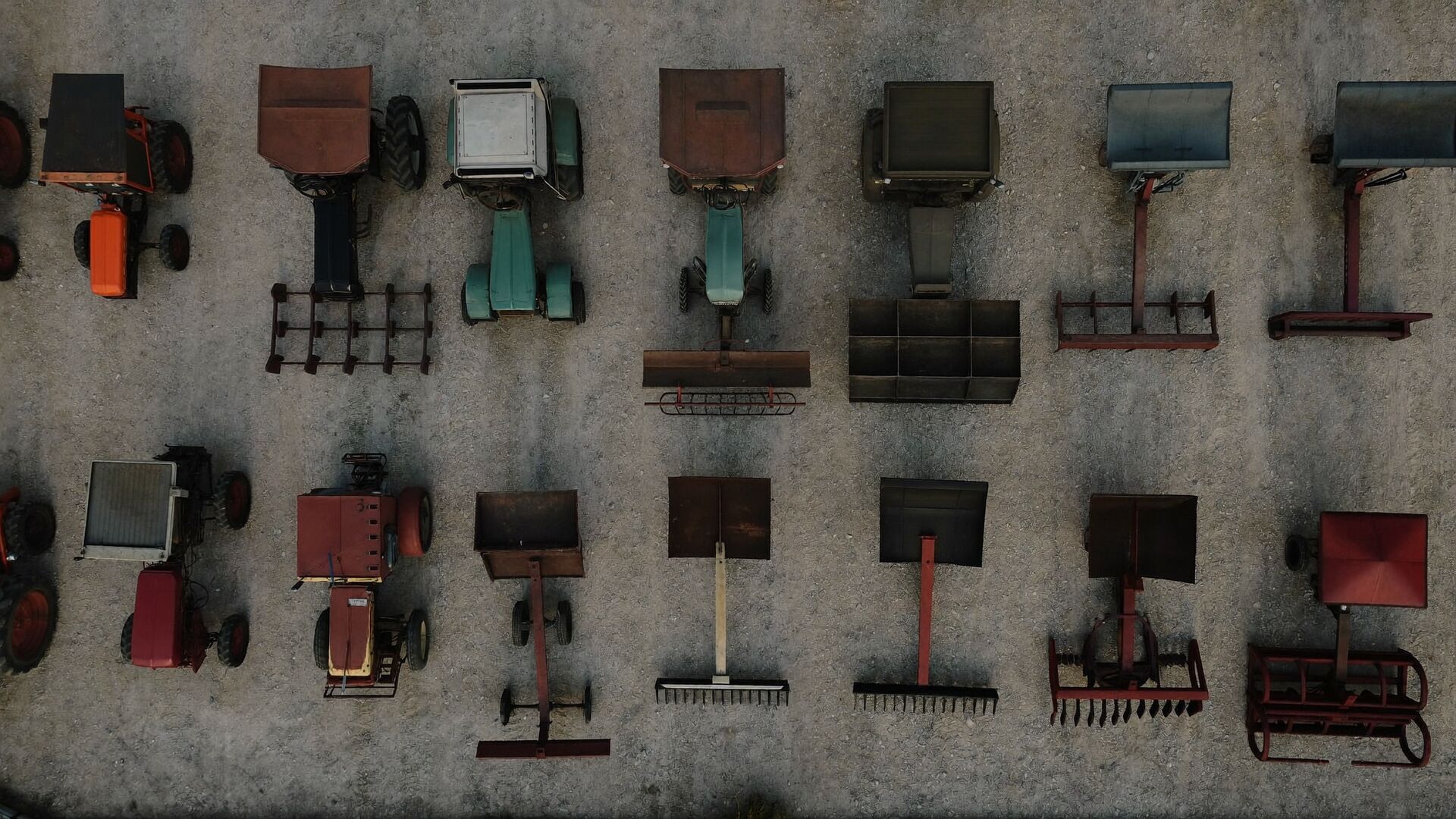
After three hard years in Southern row crops, the equipment market is doing two things at once.
Supply is tightening. New equipment sales have fallen for two years running; U.S. combine sales dropped about 36% in 2025 and tractor sales about 10%, according to Association of Equipment Manufacturers (AEM) data. Manufacturers cut production and dealer lots thinned out. Sandhills' August 2026 report showed used inventory down year over year across every category it tracks, with compact tractors down 23.5%, and planter auction values up 15.3%.
The market is splitting. Late-model, low-hour machines with documented service histories are bringing strong money. Older equipment is soft, and dealer sentiment is cautious — in Sandhills' second-quarter survey, 57% of dealers expected conditions to stay largely unchanged over the next twelve months. My own read, which is what I offered on air, is that general-purpose equipment finds its floor in late 2026 or into 2027. The Southeast's specialty iron — cotton pickers, peanut combines, diggers and inverters — is a different animal. It trades in a thin regional market that a national price guide does not capture well, and as more operations sell out or disperse, that regional supply puts continuing downward pressure on older units.
There is no single number. This surprises people more than anything else I say about equipment. Land has essentially one market value. Machinery has a family of them, and the premise has to be named before the number means anything:
- Fair market value in continued use — the machine as part of a working operation.
- Fair market value installed or removed — for fixed equipment, whether the cost to take it out comes off the top.
- Orderly liquidation value — a reasonable marketing period, seller under some compulsion.
- Forced liquidation value — sale now, as-is, where-is.
The trade level matters too: a dealer retail price, an auction hammer price and a liquidation price are three different markets. A combine working on your farm in October is worth more than the same combine that has to be hauled to an auction in February.
And a depreciation schedule is not a market value. The fixed asset register your accountant keeps for tax purposes reflects cost and recovery periods, not what a buyer would pay. I have watched a financing package come apart because the valuation leaned on the tax asset register and folded the equipment into the real estate. When a lender, an estate or a buyer needs a number, the machinery deserves its own appraisal, under the right premise, by someone who works that market.
Before the next storm. In the first part of this newsletter's IRS series, I wrote about Richey v. Commissioner (T.C. Memo. 2023-43), where casualty loss claims of more than $820,000 were disallowed in full. The taxpayers had a real estate agent's opinion built largely from listing printouts, repair estimates that included improvements, and no credible before-and-after appraisal. Congress has since made the casualty loss rules for personal-use property permanent and extended them to qualifying state-declared disasters, though Treasury has not issued guidance on how the state designation will work.
The practical step costs nothing: keep an equipment list with serial numbers, hours and photographs, and take pre-season photos of the buildings. Every one of those facts is easy to collect in October and expensive to reconstruct after a hurricane.
4. Cattle and drought: the question I did not prepare for
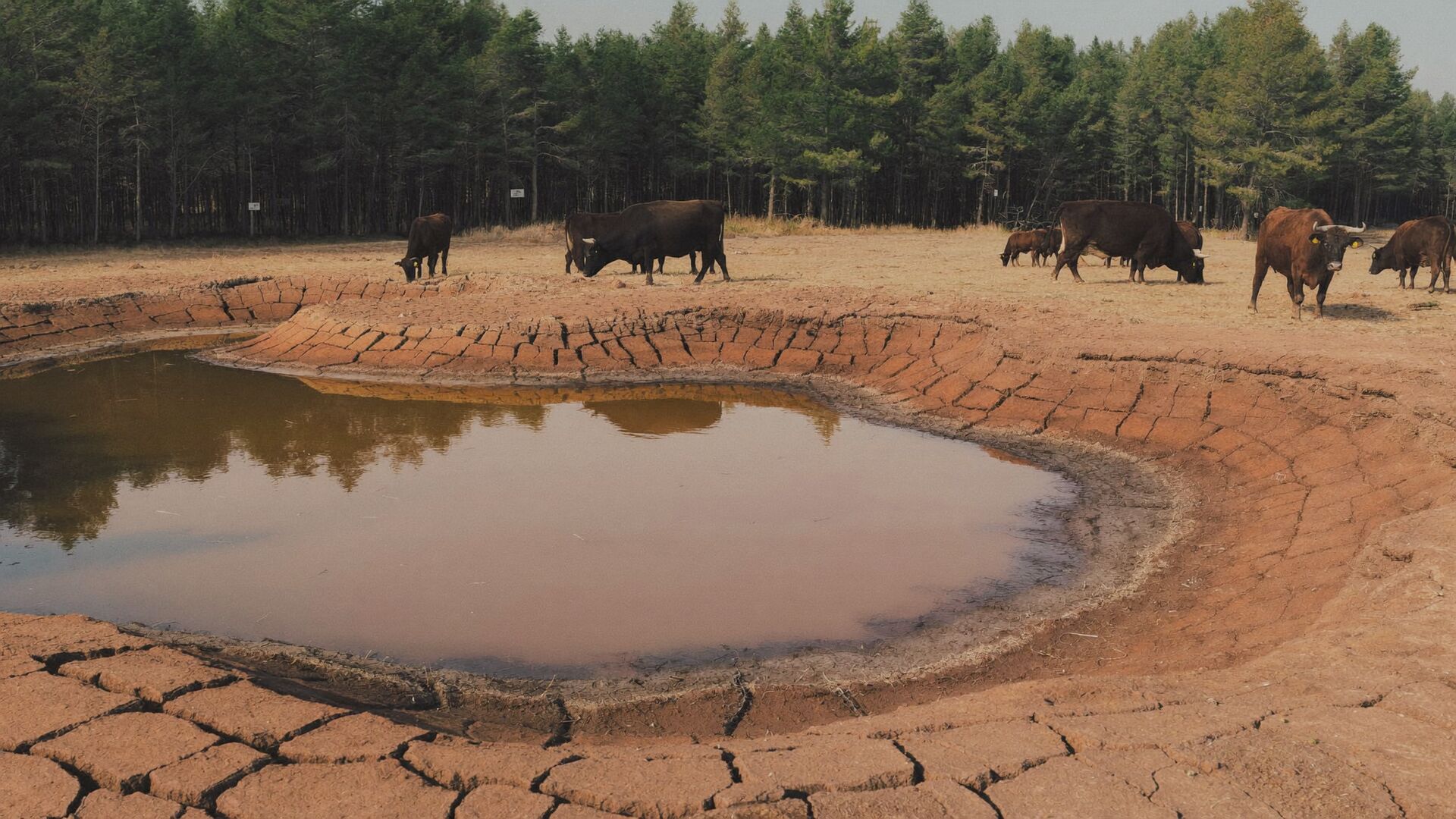
The segment closed with a question that was not on my sheet — drought, feed costs, and what a slow herd rebuild means for Southeast pasture and ranch values. My answer on air was short and honest: it is tough. Costs are up across the board and the cattle market has not always carried them.
The picture since the taping has sharpened. The U.S. Drought Monitor map for September 29 showed 42.1% of Georgia in drought, up more than 21 points in a single week. Nationally, the USDA's July inventory put cattle and calves at 94.2 million head — the first year-over-year increase since 2018, and a small one, with beef replacement heifers up 3% and beef cows still down 1%. Prices reached record territory in June and have since come off.
For valuation, the point worth making is narrow. Pasture and ranch land are valued on what they can carry, and carrying capacity depends on water and forage more than on any single season's cattle price. A drought year should not be capitalized as if it were permanent, and a record price month should not be either. The appraisal question is the stabilized one: in a normal rainfall year, with the water rights and improvements actually present, how many animal units does this property support, and what does a buyer pay for that? Ponds, wells, cross-fencing and hay ground are where Southeast grazing value is made or lost, and they belong on the inventory alongside the acreage.
The through-line
Easements, transmission corridors, machinery and pasture look like four different subjects. They are one subject asked four ways. In each case, a farm family is about to sign something — a deed of easement, a utility's right-of-way agreement, a loan package, an estate return — and the other side of the table already has a number. The family is better served by having its own, built on what it actually owns: the rights, the contracts, the condition records, the water.
A question for your practice: When a client brings you a right-of-way offer or an equipment-backed loan, who on your team checks the premise behind the number before anyone checks the number itself?
My thanks to the American Society of Farm Managers and Rural Appraisers and to Stacey Kimberly of its communications team for arranging both Land Report appearances, and to RFD-TV for giving rural valuation five minutes of national airtime. The first interview, from August, is the companion to this one.
Solving complex real estate and personal property problems is the work our team does. On a farm or ranch that usually means assembling one inventory of what the client actually holds — the land and the rights attached to it, the easements and encumbrances, the water, the improvements, the machinery and the operating business — and turning that inventory into numbers a lender, a buyer, a court or a taxing authority will accept.
If a client's holdings raise these questions — a farm considering an easement, a parcel in the path of a transmission line, an estate or loan that turns on equipment value, a ranch operating through drought — that intersection is exactly where our team works. If your firm would like a private presentation on these topics, feel free to reach out. We regularly present to law firms and legal teams (including continuing legal education (CLE)-style briefings), certified public accountant (CPA) firms and societies (including continuing professional education (CPE)-style sessions), family offices, lenders, owner-users and industry stakeholders on complex property and specialized asset issues.
Daniel Boring, CRE®, MAI, ARA, ASA | Senior Vice President – Valuation Advisory Services | Kidder Mathews
Beyond the Core Four focuses on specialized properties that fall outside the traditional industrial, retail, multifamily and office categories. The newsletter examines how value, risk and utility are shaped by the operational realities of assets such as quarries, marinas, agricultural facilities, processing plants, water-dependent operations and other complex property types where the real estate is only part of the story.
Watch the segment: Land Report on YouTube.
The discussion is based on real-world appraisal and advisory experience and is presented for educational purposes only. It is not intended as valuation advice, legal advice, tax advice, accounting advice or investment advice for any specific property, transaction or dispute. Appearance on the Land Report does not imply endorsement by ASFMRA or RFD-TV of any firm or service.